Category: Business Growth

  • Google My Business Optimization for Pokhara: Rank Higher in Local Search Results

    Google My Business Optimization for Pokhara: Rank Higher in Local Search Results

    When someone searches “restaurant near me” or “IT company Pokhara,” Google shows a map with three businesses. Those three spots capture 44% of all clicks. Your Google Business Profile (formerly Google My Business) is the single most important factor determining whether your business appears in these results. It’s free to set up, takes 1-2 hours to optimize properly, and can drive more local customers to your business than any other single marketing action.

    NepTechPal optimizes Google Business Profiles as a core part of our local SEO services for Pokhara businesses.

    Why Is Google Business Profile So Important for Pokhara Businesses?

    Google Business Profile is the #1 factor in local search rankings, appears before regular search results, shows your business on Google Maps, and is completely free — making it the highest-ROI marketing tool available to any local business.

    What appears when someone searches locally:
    1. Google Ads (paid, top)
    2. Local Pack / Map results (your Google Business Profile — FREE)
    3. Organic search results (your website — requires SEO)

    For Pokhara specifically:
    – Tourists search “hotels Pokhara,” “restaurants Lakeside,” “trekking agency Pokhara” constantly
    – Local customers search “dentist Pokhara,” “gym near me,” “hardware shop Pokhara”
    – Your Google Business Profile is often the FIRST thing potential customers see
    – Reviews on your profile directly influence booking and purchasing decisions

    Step-by-Step: How to Optimize Your Google Business Profile

    Step 1: Claim and Verify Your Profile

    1. Go to business.google.com
    2. Search for your business (it may already exist as an unverified listing)
    3. If it exists: claim it. If not: create a new listing
    4. Verify ownership (usually via postcard, phone, or email)
    5. Verification takes 3-14 days

    Step 2: Complete Every Field (100% Profile Completion)

    Field What to Enter Optimization Tip
    Business name Exact legal business name Don’t add keywords (violates guidelines)
    Primary category Most specific category “Web Development Company” not “Technology”
    Additional categories All relevant (up to 9) Add every applicable category
    Address Exact location Must match website and all directories
    Phone Local number Same number everywhere online
    Website Your website URL Link to homepage
    Hours Accurate, updated Include special hours for holidays
    Description 750 characters, keyword-rich Include services, location, and USPs
    Services List every service Include pricing if possible
    Products List key products With photos and descriptions

    Step 3: Add Quality Photos (20+ Minimum)

    Photo Type Quantity Purpose
    Exterior 3-5 Help customers find your location
    Interior 5-10 Show the environment/atmosphere
    Team 3-5 Build personal connection
    Products/services 5-10 Showcase what you offer
    Action shots 3-5 Your team working, serving customers

    Photo tips: Use real photos (not stock), ensure good lighting, include geotagged images taken at your location, update seasonally. Businesses with 100+ photos get 520% more calls than average.

    Step 4: Collect and Manage Reviews

    Reviews are the second most important local ranking factor. Target 20+ reviews with 4.0+ average rating.

    Review generation strategy:
    – Ask every satisfied customer for a review (directly, politely)
    – Create a short URL linking to your review page (share via WhatsApp, email, QR code)
    – Respond to EVERY review within 24 hours
    – Thank positive reviewers specifically
    – Address negative reviews professionally with resolution offers
    – Never offer incentives for reviews (against Google policy)

    For more on review strategy, see our article on social proof for Nepali businesses.

    Step 5: Post Regularly (Weekly)

    Google Business Profile allows posts that appear in your listing:
    Updates: Company news, new services, team changes
    Offers: Special deals with dates and details
    Events: Upcoming events with dates and registration links
    Products: New products or featured items

    Post weekly at minimum. Active profiles rank higher than dormant ones.

    Step 6: Answer Questions

    The Q&A section allows anyone to ask questions about your business:
    – Seed 10-15 common questions yourself (and answer them)
    – Monitor for new questions and answer promptly
    – Include keywords naturally in your answers
    – Report spam or inappropriate questions

    Need help with this? NepTechPal offers free consultations for businesses in Nepal.

    Contact Us

    How Long Before I See Results from GMB Optimization?

    Initial visibility improvements appear within 2-4 weeks of full optimization. Significant local pack ranking improvements typically take 1-3 months with ongoing effort.

    Optimization Stage Timeline Expected Result
    Profile completion Week 1 Appear for brand name searches
    Photo upload + description Week 2 Improved click-through rate
    First 5-10 reviews Week 2-4 Credibility boost, ranking improvement
    Regular posting (4 weeks) Month 1-2 Increased profile views
    20+ reviews collected Month 2-3 Local pack positioning for target keywords
    Ongoing optimization Month 3+ Sustained and improving local visibility

    What the Community Is Asking

    “How do I get my business to show up on Google Maps in Pokhara?” Claim your Google Business Profile, complete every field, add photos, collect reviews, and post regularly. For most Pokhara businesses, this process takes 2-4 weeks to set up properly and shows results within 1-3 months.

    “Why does my competitor rank higher on Google Maps?” They likely have: more reviews, a more complete profile, more photos, more regular posts, and/or a website with better local SEO. Audit their profile against yours and close the gaps.

    “Can I have a Google Business Profile without a physical storefront?” Yes. Service-area businesses (plumbers, freelancers, delivery services) can create profiles with service areas defined instead of a physical address displayed. However, having a verifiable address strengthens your profile.

    “How many reviews do I need to rank in the local pack?” There’s no magic number, but businesses in Pokhara’s local pack typically have 15-50+ reviews. Focus on consistent review collection (2-4 new reviews per month) rather than a single burst.

    How NepTechPal Can Help

    NepTechPal provides Google Business Profile optimization as part of our local SEO services. We handle complete profile setup, optimization, photo guidance, review strategy, weekly posting, and ongoing management. Combined with website SEO and digital marketing, this creates a comprehensive local search presence for your Pokhara business.

    Optimize your Google presence with NepTechPal

    Frequently Asked Questions

    Is Google Business Profile really free?

    Yes, completely free. No premium version, no hidden fees. Google provides this tool to help local businesses appear in search results. The only cost is the time to set up and maintain your profile (or the cost of hiring a professional to do it).

    Can NepTechPal manage my Google Business Profile?

    Yes. We offer Google Business Profile management as part of our local SEO and digital marketing packages. This includes weekly posts, review monitoring, photo updates, and performance reporting.

    What’s the biggest mistake businesses make with Google Business Profile?

    Setting it up and forgetting it. An inactive profile with no recent posts, no new reviews, and outdated information signals to Google that the business may not be active. Treat your profile as a living marketing channel that needs regular attention.

    How do I track how many customers come from my Google Business Profile?

    Google provides Insights within the profile dashboard showing: how many people saw your profile, how many clicked for directions, how many called, and how many visited your website. Track these monthly to measure impact.


    Want to dominate local search in Pokhara? NepTechPal optimizes your Google Business Profile for maximum visibility. Get a free audit at neptechpal.com.np


    Related Articles:
    Local SEO for Pokhara Businesses
    Social Proof for Nepali Businesses
    SEO Services in Pokhara

    Ready to grow your business with technology? Schedule a free consultation today.
    Talk to Our Team →

  • Outsourcing IT in Nepal vs In-House Development: A Cost-Benefit Analysis for SMEs

    Outsourcing IT in Nepal vs In-House Development: A Cost-Benefit Analysis for SMEs

    Should you hire developers and build an internal IT team, or outsource to an IT company like NepTechPal? For Nepali SMEs, this decision directly impacts budget, speed, quality, and long-term technology strategy. The answer isn’t one-size-fits-all — it depends on your project volume, budget, timeline, and how central technology is to your business model.

    Here’s a data-driven comparison with real NPR numbers.

    How Do Costs Actually Compare?

    Outsourcing to a Nepali IT company costs NPR 80,000-500,000 per project with no ongoing salary commitment, while an in-house developer costs NPR 40,000-150,000/month in salary plus benefits, equipment, and overhead — making outsourcing more cost-effective for businesses with fewer than 3-4 ongoing projects per month.

    In-House Developer Costs (Annual)

    Cost Component Junior Dev (NPR/year) Mid-Level Dev (NPR/year) Senior Dev (NPR/year)
    Salary 240,000 – 480,000 480,000 – 960,000 960,000 – 1,800,000
    Benefits (SSF, insurance) 36,000 – 72,000 72,000 – 144,000 144,000 – 270,000
    Equipment (laptop, software) 80,000 – 120,000 (year 1) 100,000 – 150,000 120,000 – 200,000
    Office space allocation 60,000 – 120,000 60,000 – 120,000 60,000 – 120,000
    Training and development 20,000 – 50,000 30,000 – 60,000 40,000 – 80,000
    Management overhead 30,000 – 60,000 40,000 – 80,000 50,000 – 100,000
    Total Year 1 466,000 – 902,000 782,000 – 1,514,000 1,374,000 – 2,570,000
    Total Year 2+ 386,000 – 782,000 682,000 – 1,364,000 1,254,000 – 2,370,000

    Outsourcing Costs (Annual, equivalent work)

    Service Per-Project Cost (NPR) Annual Cost (4-6 projects)
    Website projects 80,000 – 300,000 each 320,000 – 1,800,000
    Mobile app projects 300,000 – 1,500,000 each Project-dependent
    Monthly SEO 20,000 – 60,000/month 240,000 – 720,000
    Monthly marketing 20,000 – 100,000/month 240,000 – 1,200,000
    Maintenance 5,000 – 25,000/month 60,000 – 300,000

    The Break-Even Calculation

    Outsourcing is cheaper when: You need fewer than 2-3 full-time developer equivalents of work per month.

    In-house is cheaper when: You have consistent, daily development needs that would keep 2+ developers fully occupied year-round AND you can recruit, retain, and manage technical talent effectively.

    For most Nepali SMEs: Outsourcing wins because:
    – Project workload is variable (not consistent 40 hours/week of development)
    – You get access to a full team (designer + developer + SEO + project manager) for less than one senior in-house developer’s salary
    – No recruitment headaches, training costs, or turnover risk
    – Scale up during busy periods, scale down during quiet ones

    When Should I Outsource?

    Outsource when technology is a support function (not your core product), when you need diverse skills across projects, when workload is variable, and when you want predictable project costs.

    Scenario Recommendation
    Building a business website Outsource
    Ongoing digital marketing Outsource
    Mobile app development Outsource (unless you’re a tech company)
    SEO and content Outsource
    Core product development (SaaS) Consider in-house (or hybrid)
    Daily system changes needed Consider in-house
    One-off projects Always outsource

    When Should I Build In-House?

    Build in-house when technology IS your core business (SaaS, tech product), when you need daily developer access for rapid changes, when you have budget for NPR 1,500,000+/year in tech salaries, and when you can effectively manage technical talent.

    In-house makes sense for:
    SaaS companies building a software product
    – Tech startups where the product IS the code
    – Large enterprises with daily development needs
    – Companies where proprietary technology is a competitive advantage

    Need help with this? NepTechPal offers free consultations for businesses in Nepal.

    Contact Us

    The Hybrid Model: Best of Both Worlds

    The most effective approach for growing Nepali businesses: outsource project-based work and specialized skills while hiring in-house for core, daily needs.

    Hybrid model example:
    In-house: 1 developer for daily maintenance, small changes, and internal tools
    Outsource to NepTechPal: Major projects (new website, app), SEO, digital marketing, specialized development

    This gives you the best of both: immediate access for daily needs AND expert teams for strategic projects.

    What the Community Is Asking

    “Should a business outsource IT development or build an in-house team?” For most Nepali businesses with annual technology spending under NPR 2,000,000: outsource. You get better quality (specialist teams), lower cost (no overhead), and more flexibility (scale up/down). Invest the savings in growing your core business.

    “How do I maintain quality when outsourcing?” Choose a reputable IT company with a strong portfolio. Define clear requirements. Establish regular communication cadence. Require code reviews and documentation. Maintain ownership of all code and credentials.

    “What if my outsourcing partner disappears?” This is why you choose a registered company (not just a freelancer), maintain ownership of all code and assets, ensure documentation exists, and keep access credentials. With NepTechPal, full ownership transfer is standard policy.

    “Can I switch from outsourcing to in-house later?” Yes. Well-documented, cleanly coded outsourced projects can be brought in-house when your volume justifies it. The key is ensuring your outsourcing partner delivers documented, maintainable code — not proprietary systems that only they can manage.

    How NepTechPal Can Help

    NepTechPal serves as the outsourced IT department for dozens of Nepali businesses — handling web development, mobile apps, SEO, digital marketing, and IT consulting so you can focus on running your business. Our Pokhara location means competitive pricing and face-to-face collaboration when you need it.

    Outsource your IT needs to NepTechPal

    Frequently Asked Questions

    At what point should I stop outsourcing and hire in-house?

    When your annual technology spending exceeds NPR 2,000,000 AND the work is consistent (not project-based), consider hiring your first in-house developer. Even then, keep outsourcing specialized work (design, SEO, major projects).

    Is outsourcing to a Pokhara company as good as Kathmandu?

    For web development, apps, marketing, and SEO: yes. Pokhara’s growing tech ecosystem delivers comparable quality at 10-30% lower cost. For highly specialized roles (enterprise AI, complex data engineering), Kathmandu may have a larger talent pool.

    How do I manage an outsourced IT team effectively?

    Clear requirements document, weekly check-ins, access to project management tools (Trello, Jira), defined milestones, and a single point of contact on each side. NepTechPal assigns a dedicated project manager to every client.

    Can I outsource just one function (like SEO) and keep everything else in-house?

    Absolutely. Many businesses outsource SEO and digital marketing while managing their own website and internal systems. This is the most common hybrid approach for Nepali SMEs.


    Want a reliable outsourcing partner? NepTechPal is the IT team you need without the overhead you don’t. Get a free consultation at neptechpal.com.np


    Related Articles:
    Freelancer vs Agency for IT Projects
    Best IT Companies in Pokhara 2026
    IT Consulting in Pokhara

    Ready to grow your business with technology? Schedule a free consultation today.

    Talk to Our Team →

  • Website ROI Calculator: Is Your Business Website Actually Making You Money?

    Website ROI Calculator: Is Your Business Website Actually Making You Money?

    You spent NPR 100,000-300,000 on a website. You pay NPR 5,000-15,000/month for hosting and maintenance. But is it actually generating revenue? Most Nepali business owners can’t answer this question — not because the website isn’t working, but because they’ve never set up the tracking to know. Your website ROI is measurable, calculable, and optimizable — you just need the right framework.

    NepTechPal builds websites designed for measurable returns and provides the analytics to prove it.

    How Do I Calculate My Website’s ROI?

    Website ROI = (Revenue generated from website – Total website costs) ÷ Total website costs × 100. For most Nepali service businesses, this means tracking leads from your website and calculating what percentage convert to paying customers.

    The ROI Formula:

    Website ROI = ((Revenue from website - Total website costs) / Total website costs) × 100
    

    Example for a Pokhara hotel:
    – Total website costs (year): NPR 200,000 (build) + NPR 60,000 (hosting + maintenance) + NPR 240,000 (SEO/marketing) = NPR 500,000
    – Direct bookings from website (year): 120 bookings × NPR 8,000 average = NPR 960,000
    – ROI: ((960,000 – 500,000) / 500,000) × 100 = 92% ROI

    Example for a Pokhara service business:
    – Total website costs (year): NPR 120,000 (build) + NPR 36,000 (hosting + maintenance) + NPR 120,000 (SEO) = NPR 276,000
    – Leads from website (year): 240 leads × 20% close rate × NPR 15,000 average project = NPR 720,000
    – ROI: ((720,000 – 276,000) / 276,000) × 100 = 161% ROI

    What Revenue Sources Should I Track from My Website?

    Track five types of revenue attribution: direct online sales, form submissions that become clients, phone calls from website visitors, appointment bookings, and brand influence on walk-in customers.

    Revenue Source How to Track Typical Attribution
    Online sales E-commerce analytics 100% attributed to website
    Form submissions Google Analytics goals, CRM Track submission → client conversion rate
    Phone calls from website Dedicated phone number or call tracking Track call → client conversion rate
    Chat/WhatsApp inquiries Message analytics Track inquiry → client conversion rate
    Direct bookings Booking system analytics 100% attributed to website
    Brand-influenced walk-ins “How did you find us?” question Partial attribution (50-70%)

    Setting up tracking:
    1. Google Analytics 4 — Track all website traffic and conversions
    2. Conversion goals — Define what counts as a lead (form, call, booking)
    3. UTM parameters — Track which marketing channels drive which conversions
    4. CRM or simple spreadsheet — Track leads through to paying customers
    5. Monthly calculation — Revenue attributed to website ÷ monthly website costs

    What’s a Good Website ROI for a Nepali Business?

    A good website ROI is 200-500% (2-5x return on investment) annually, with well-optimized websites achieving 500-1,000%+ ROI by year 2-3 as initial development costs are amortized and organic traffic compounds.

    ROI Range Assessment Action
    Negative (below 0%) Website is losing money Diagnose: traffic problem or conversion problem?
    0-100% Break-even to modest return Optimize: improve SEO, fix conversion issues
    100-300% Good return Scale: invest more in marketing
    300-500% Strong return Expand: add services, increase ad spend
    500%+ Excellent return Your website is a profit engine

    ROI improves over time because:
    – Initial build cost is amortized (year 1 includes NPR 100,000-300,000 build; years 2+ don’t)
    SEO traffic compounds (each month of SEO adds to previous months)
    Content attracts traffic indefinitely
    – Brand recognition increases conversion rates
    – Referral traffic grows as more people know your site

    Need help with this? NepTechPal offers free consultations for businesses in Nepal.

    Contact Us

    Why Might My Website Have Poor ROI?

    Poor website ROI comes from four sources: not enough traffic (nobody visits), low conversion rate (visitors don’t take action), wrong traffic (visitors aren’t your target customers), or no tracking (you can’t see the revenue it generates).

    Problem Symptom Solution
    No traffic Under 500 monthly visitors Invest in SEO and marketing
    Wrong traffic High traffic but no leads Refine keyword targeting, improve ad targeting
    Low conversion Traffic but no inquiries/sales Improve website design, add clear CTAs, fix speed
    No tracking Can’t measure results Set up Google Analytics, conversion goals
    No follow-up Leads but no sales Improve sales process, email nurturing

    The most common issue for Nepali businesses: No tracking. Many businesses generate leads from their website but don’t know it because they’ve never set up analytics or conversion tracking. NepTechPal includes analytics setup in every website project.

    How Do I Improve My Website’s ROI?

    Improve ROI through three levers: increase traffic (more visitors), increase conversion rate (more visitors become leads), and increase close rate (more leads become customers).

    Quick ROI wins:
    1. Add a phone number prominently — Nepali customers prefer calling. Make your number clickable on mobile.
    2. Improve page speed — Reducing load time from 5 seconds to 2 seconds can double conversions.
    3. Add social proof — Customer testimonials, Google review rating, client logos.
    4. Simplify forms — Reduce form fields to name + phone number (add more fields later in the process).
    5. Create landing pages for ad campaigns — Don’t send ad traffic to your homepage.
    6. Start a blogContent marketing drives free organic traffic that compounds.
    7. Optimize for local SEO — Appear in Google Maps for local searches.

    What the Community Is Asking

    “How do I calculate if my website is worth the investment?” Set up Google Analytics, define conversion goals (form submissions, phone clicks, bookings), track monthly conversions, multiply by your average customer value, and compare to your total website investment. If the calculation is positive, your website is profitable.

    “My website looks great but doesn’t generate leads — why?” Beautiful websites without conversion strategy are expensive brochures. Ensure every page has a clear CTA, your SEO is working, your content addresses customer needs, and your forms are simple. Design without strategy = poor ROI.

    “Is a NPR 200,000 website worth it for a small business?” If it generates 2 customers per month at NPR 10,000 each, it pays for itself in 10 months and generates NPR 40,000/month in perpetuity — a massive ROI. The question isn’t “Is NPR 200,000 a lot?” but “What return will it generate?”

    “Should I invest in a better website or more marketing?” If your current website converts visitors into leads at 2%+ and loads in under 3 seconds, invest in marketing (more traffic). If conversion is below 2% or the site is slow/unprofessional, fix the website first — sending more traffic to a broken website wastes marketing money.

    How NepTechPal Can Help

    NepTechPal builds websites with ROI as the primary design objective — not just aesthetics. Every website includes analytics setup, conversion tracking, and SEO foundation. We measure success by leads and revenue generated, not just visual appeal. Our digital marketing services then drive traffic to maximize your website’s revenue potential.

    Build a revenue-generating website with NepTechPal

    Frequently Asked Questions

    How long before my website shows positive ROI?

    With SEO and marketing: 6-12 months. With Google Ads: potentially within the first month. Without any marketing: possibly never (a website alone doesn’t generate traffic).

    Can I track ROI if my business mainly gets phone calls?

    Yes. Use a dedicated phone number for your website (different from other marketing). Track all calls received on that number. Even simpler: ask every caller “How did you find us?” and record the answers.

    What if my website has zero traffic after 6 months?

    Your website either has SEO problems or you’re not driving traffic to it. Get an SEO audit and start digital marketing. A website without traffic is like a shop with no road leading to it.

    Is website ROI different for e-commerce vs service businesses?

    E-commerce ROI is easier to calculate (direct sales tracked). Service business ROI requires tracking leads through to closed deals. Both can achieve strong ROI — the measurement approach differs.


    Is your website making you money? NepTechPal builds websites designed for measurable ROI. Get a free website ROI assessment at neptechpal.com.np


    Related Articles:
    How Much Does a Website Cost in Nepal?
    How to Measure Digital Marketing ROI
    SEO Services in Pokhara

    Ready to grow your business with technology? Schedule a free consultation today.

    Talk to Our Team →

  • How to Get Your First 100 Customers Online as a Nepali Business: A Practical Playbook

    How to Get Your First 100 Customers Online as a Nepali Business: A Practical Playbook

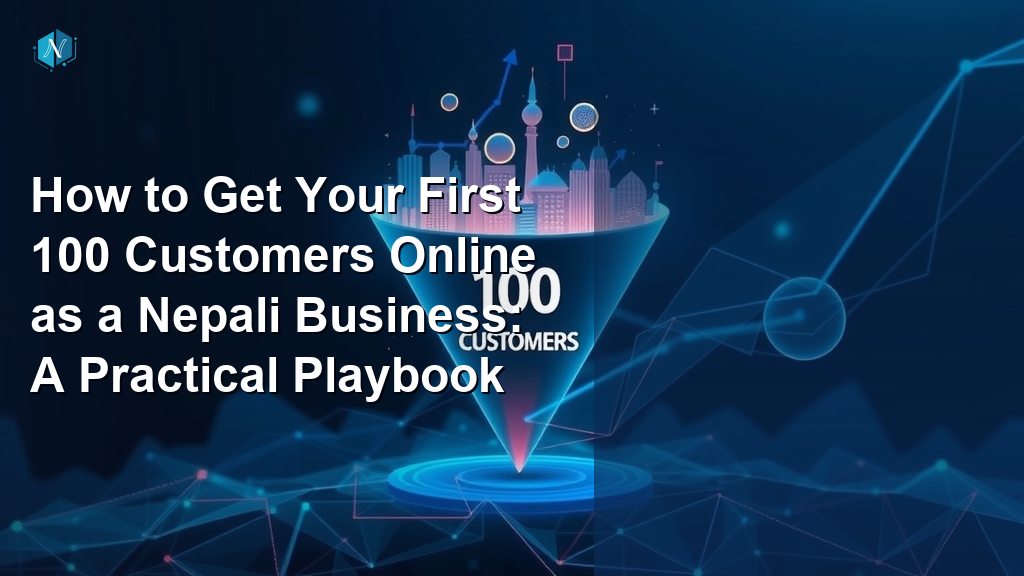
    Your website is live. Your social media pages are created. Your e-commerce store has products loaded. Now what? The gap between “online presence” and “online customers” is where most Nepali businesses stall. Getting your first 100 customers online requires deliberate, focused action — not just waiting for people to find you. This playbook gives you a week-by-week plan that works for any Nepali business starting its online customer acquisition journey.

    NepTechPal helps new businesses bridge the gap from launch to sustainable online growth.

    Week 1-2: Activate Your Immediate Network

    Goal: First 10-20 customers from people who already know you

    Your first online customers should come from your existing network. These people already trust you — they just need to know you’re online.

    Day 1-3: Personal outreach
    – Message every friend, family member, and business contact about your online presence
    – Share your website link personally (not just a broadcast post)
    – Ask 10 close contacts to make your first purchase/booking and leave a review
    – Share your Google Business Profile link and ask for honest reviews

    Day 4-7: Social media announcement
    – Post a launch announcement on your personal and business Facebook pages
    – Share on Instagram with compelling visuals
    – Join 5-10 relevant Facebook groups (Pokhara business groups, industry groups)
    – Post value-adding content in those groups (not spammy self-promotion)

    Day 8-14: Local partnerships
    – Contact 5-10 complementary local businesses about cross-promotion
    – Offer a referral incentive for existing customers who bring friends
    – If you have a physical location, promote your online presence to walk-in customers

    Expected result: 10-20 customers from personal network activation

    Week 3-4: Build Your Google Presence

    Goal: Get discovered by strangers searching for what you offer

    Google Business Profile optimization:
    – Complete every field on your profile
    – Upload 20+ quality photos
    – Post weekly updates (offers, tips, behind-the-scenes)
    – Respond to every review within 24 hours
    – Add products/services with descriptions and pricing

    Basic SEO:
    – Ensure every page of your website has optimized title tags and meta descriptions
    – Submit sitemap to Google Search Console
    – Publish 2-4 blog posts targeting keywords your customers search for
    – Add your business to 10-15 online directories (consistent NAP everywhere)

    Expected result: Start appearing in Google searches; first organic visitors arrive

    Week 5-8: Launch Targeted Advertising

    Goal: Reach potential customers who don’t know you yet

    Facebook/Instagram Ads (NPR 10,000-20,000/month):
    – Create a lookalike audience based on your existing customers
    – Target by location (Pokhara, or your service area)
    – Target by interests relevant to your business
    – Start with a simple offer (10% off first order, free consultation, free trial)
    – Run A/B tests with different images and copy
    – Track conversions, not just likes

    Google Ads (NPR 15,000-30,000/month):
    – Target high-intent keywords (“buy [product] Nepal,” “[service] Pokhara”)
    – Send traffic to optimized landing pages
    – Start with a small daily budget (NPR 500-1,000) and optimize based on data

    Expected result: 20-40 new customers from paid advertising

    Need help with this? NepTechPal offers free consultations for businesses in Nepal.

    Contact Us

    Week 9-12: Content and Community

    Goal: Build sustainable organic acquisition

    Content marketing:
    – Publish 2-4 blog posts per week
    – Create helpful how-to content related to your industry
    – Share content across social media channels
    – Repurpose blog content into social media graphics, carousels, and short videos

    Email marketing:
    – Set up email collection on your website
    – Offer a lead magnet (discount, free guide, template)
    – Send weekly or biweekly newsletters with value content
    – Create an automated welcome email sequence

    Community building:
    – Respond to every comment and message within hours
    – Ask customers for testimonials and reviews
    – Share customer success stories and user-generated content
    – Create a WhatsApp broadcast group for special offers

    Expected result: 30-50 new customers from content and community efforts

    The 100 Customer Math

    Source Expected Customers Timeframe Cost
    Personal network 10-20 Week 1-2 Free
    Google Business Profile 5-15 Week 3-8 Free
    Organic SEO 5-10 Week 4-12 Content creation time
    Facebook/Instagram Ads 20-40 Week 5-12 NPR 30,000-60,000
    Google Ads 10-25 Week 5-12 NPR 40,000-80,000
    Referrals 10-15 Week 4-12 Referral incentive
    Email marketing 5-10 Week 9-12 NPR 0-3,000/month
    Total 65-135 12 weeks NPR 70,000-150,000

    Key insight: Getting your first 100 customers costs NPR 70,000-150,000 in total marketing spend. That’s NPR 700-1,500 per customer. As your organic channels (SEO, content, reviews, referrals) grow, this cost drops dramatically over time. By month 12, your cost per customer should be 50-70% lower than month 3.

    What the Community Is Asking

    “How do new businesses in Nepal attract their first customers online?” Start with your personal network (free, immediate), then Google Business Profile (free, local visibility), then targeted paid advertising (immediate reach to strangers), then content marketing (long-term organic growth). Don’t try to do everything at once — follow the sequence.

    “How long does it take to get the first 100 online customers?” With focused effort and moderate advertising budget (NPR 50,000-100,000 total): 8-16 weeks. Without advertising: 4-8 months. The timeline depends on your industry, pricing, and how actively you promote.

    “Can I get customers online without spending money?” Yes, but slowly. Free methods (personal network, social media organic, Google Business Profile, SEO) work but take 3-6 months to generate consistent traffic. A small advertising budget (even NPR 10,000-20,000/month) dramatically accelerates results.

    “Which channel should I focus on first?” Facebook advertising for immediate results at the lowest cost. Google Business Profile for free local visibility. SEO and content for long-term sustainable traffic.

    How NepTechPal Can Help

    NepTechPal helps new Nepali businesses build their online customer acquisition engine — from website development and SEO to social media marketing and Google Ads. We’ve helped dozens of Pokhara businesses go from zero to consistent online customer flow.

    Start acquiring customers with NepTechPal

    Frequently Asked Questions

    What’s the minimum budget to get my first 100 online customers?

    NPR 50,000-100,000 in total marketing spend over 8-12 weeks, covering advertising (NPR 30,000-60,000), content creation (NPR 10,000-20,000), and tools (NPR 5,000-10,000). Personal network activation and Google Business Profile are free.

    Should I focus on one channel or multiple?

    Start with 2 channels maximum for the first month. Master them before adding more. Facebook + Google Business Profile is the highest-impact starting combination for most Nepali businesses.

    What if my first advertising campaigns don’t work?

    Normal. First campaigns are experiments. Analyze data, identify what didn’t work (wrong audience, wrong offer, wrong landing page), adjust, and try again. Most successful campaigns are the result of 3-5 iterations, not the first attempt.

    How do I keep customers coming back after the first purchase?

    Email marketing for follow-up and offers. WhatsApp for personal communication. Loyalty programs for repeat purchases. Excellent customer service that generates reviews and referrals. Retention is cheaper than acquisition — invest in keeping customers happy.


    Ready to get your first 100 online customers? NepTechPal builds customer acquisition strategies for Nepali businesses. Get a free consultation at neptechpal.com.np


    Related Articles:
    Digital Marketing Guide for Nepal 2026
    Social Media Marketing ROI Nepal
    How to Launch an Online Store in Nepal

    Ready to grow your business with technology? Schedule a free consultation today.

    Talk to Our Team →

  • How NepTechPal Works: Our Development Process from Discovery to Launch

    How NepTechPal Works: Our Development Process from Discovery to Launch

    “What actually happens after I hire a web development company?” It’s a question many business owners have but few ask — often because they don’t know what to ask. Transparency about process builds trust, sets expectations, and prevents the frustration that comes from uncertainty. This article opens the curtain on exactly how NepTechPal builds websites, apps, and digital products — from your first conversation with us to the day your project goes live and beyond.

    No mystery. No surprises. Just a clear, proven web development process.

    Our Six-Phase Development Process

    Every NepTechPal project follows six phases: Discovery, Planning, Design, Development, Testing, and Launch — with ongoing support after delivery. Each phase has clear deliverables and your involvement at defined checkpoints.

    Phase 1: Discovery (Week 1-2)

    Purpose: Understand your business, goals, audience, and competition before writing a single line of code.

    What happens:
    Kickoff meeting — We meet at our Jalpa Road office or your location in Pokhara. For remote clients, we conduct a thorough video call.
    Business deep-dive — Your industry, customers, competitors, unique selling points, and growth plans
    Current state audit — If you have an existing website or digital presence, we audit what’s working and what isn’t
    Technical requirements — What your project needs to DO, not just how it should look
    Budget and timeline alignment — Honest discussion about what’s achievable within your constraints

    Deliverables:
    – Discovery report summarizing findings
    – Project scope document
    Technology recommendations
    – Preliminary timeline
    – Detailed cost proposal

    Your involvement: 2-4 hours of meetings and questionnaire responses

    What makes this phase different at NepTechPal: We ask business questions, not just design preferences. “What action do you want visitors to take?” matters more than “What color do you like?” This business-first approach is why our projects deliver results, not just aesthetics.

    Phase 2: Planning (Week 2-3)

    Purpose: Create the blueprint that guides every subsequent decision.

    What happens:
    Sitemap creation — Complete structure of every page and how they connect
    Content strategy — What content each page needs and who provides it
    SEO planning — Keyword mapping, URL structure, meta tag strategy
    Functional specifications — Detailed descriptions of every feature
    Technology stack finalizationWordPress, Laravel, Next.js, or Flutter
    Project milestones — Specific dates for each phase completion
    Communication plan — How, when, and how often we update you

    Deliverables:
    – Sitemap (visual)
    – Functional specification document
    – Content plan and requirements list
    – Project timeline with milestones
    – Payment schedule tied to deliverables

    Your involvement: 1-2 hours reviewing and approving the plan

    Phase 3: Design (Week 3-5)

    Purpose: Create the visual experience before building anything.

    What happens:
    Wireframes — Low-fidelity layouts showing page structure and content placement
    Client review — You approve wireframes before visual design begins
    Visual design — High-fidelity mockups with your brand identity, colors, typography, and imagery
    Responsive design — Desktop, tablet, and mobile layouts
    Interactive prototype — Clickable mockup you can test on your phone
    Design iterations — 2-3 rounds of revisions based on your feedback

    Deliverables:
    – Wireframes (all key pages)
    – Visual mockups (desktop + mobile)
    – Interactive prototype
    – Final approved designs

    Your involvement: 2-3 review sessions (30-60 minutes each)

    Important: No development begins until you approve the design. This prevents expensive changes later. A design change costs minutes; a code change costs hours.

    Phase 4: Development (Week 4-9)

    Purpose: Build the approved design into a functioning website or application.

    What happens:
    Environment setup — Development and staging servers configured
    Frontend development — Converting designs into responsive, interactive code
    Backend development — Database, business logic, admin panel, content management
    IntegrationPayment gateways, booking systems, analytics, email, third-party APIs
    SEO implementation — Meta tags, schema markup, sitemap, speed optimization
    Content entry — Uploading and formatting your content
    Sprint demos — Regular demonstrations of completed work (bi-weekly)

    Deliverables:
    – Functional website/app on staging server
    – Admin panel training documentation
    – Sprint demo recordings

    Your involvement: Bi-weekly 30-minute review sessions

    Staging access: You can view the in-progress website on a staging URL at any time — not just during demos. Full transparency from day one.

    Phase 5: Testing (Week 8-10)

    Purpose: Ensure everything works perfectly across devices, browsers, and scenarios.

    What happens:
    Functional testing — Every button, form, link, and feature tested
    Cross-browser testing — Chrome, Firefox, Safari, Edge
    Device testing — 10+ physical devices (various Android phones, iPhones, tablets)
    Speed optimization — Image compression, caching, code minification
    Security testing — SSL verification, form protection, vulnerability scanning
    Content review — Spelling, grammar, accuracy, image quality
    User acceptance testing (UAT) — You and your team test everything
    Bug fixing — Identified issues resolved before launch

    Deliverables:
    – Test report documenting all tests performed
    – Speed audit results (PageSpeed score)
    – Security scan results
    – UAT sign-off from you

    Your involvement: 2-4 hours testing the site yourself

    Phase 6: Launch (Week 10-11)

    Purpose: Deploy to production and make your project live.

    What happens:
    Pre-launch checklist — 30+ items verified before going live
    DNS configurationDomain pointing to live hosting
    SSL installation — HTTPS activated and verified
    Google Search Console submission — Sitemap submitted for indexing
    Google Analytics setup — Tracking verified and working
    Final verification — Live site tested on multiple devices
    Launch announcement — Coordinate with your marketing (social media, email)
    Client training — 1-2 hour session on managing your website/app

    Deliverables:
    – Live website/application
    – All login credentials
    – Source code (if applicable)
    – Training documentation
    – 30-day post-launch support

    After Launch: Ongoing Support

    Launch isn’t the end — it’s the beginning. NepTechPal provides structured maintenance and support to keep your project running smoothly.

    Post-launch support includes:
    – 30 days of complimentary bug fixes
    – Optional monthly maintenance plans (NPR 5,000-25,000/month)
    SEO and digital marketing services
    – Feature additions and enhancements (quoted per request)
    – Performance monitoring and optimization
    – Quarterly strategy reviews

    Need help with this? NepTechPal offers free consultations for businesses in Nepal.

    Contact Us

    What the Community Is Asking

    “What does a typical development process look like at an IT company?” The six-phase process described above is industry standard for professional agencies. If a company can’t describe their process, they may not have one — which means your project will be chaotic.

    “How involved do I need to be during development?” At NepTechPal, we require approximately 6-10 hours of your time over a typical 8-10 week project — for discovery meetings, design reviews, sprint demos, and UAT. We handle everything else, but your input at key checkpoints ensures the final product matches your vision.

    “What if I need changes during development?” Changes happen — and that’s okay. We use a formal change request process: you describe the change, we estimate the impact on cost and timeline, you approve, and we implement. This prevents scope creep while maintaining flexibility.

    “How do I know you won’t just disappear with my money?” Our milestone-based payment structure protects you: you pay in installments tied to completed deliverables. You never pay for work that hasn’t been done. Plus, we’re a registered company on Jalpa Road, Pokhara — we’re not going anywhere.

    How NepTechPal Can Help

    This IS how NepTechPal helps. The process described above is exactly what every client experiences — transparent, structured, and focused on delivering business results. Whether you need a website, mobile app, or complete digital presence, this process ensures your project is delivered on time, on budget, and to specification.

    Start your project with NepTechPal

    Frequently Asked Questions

    How long does a typical project take?

    Basic business website: 4-6 weeks. Business website with custom features: 6-10 weeks. E-commerce site: 8-14 weeks. Mobile app: 12-20 weeks. Complex web application: 16-24+ weeks. See our detailed timeline guide for more specifics.

    What do I need to provide before the project starts?

    Business information for discovery, access to existing accounts (hosting, domain, analytics), brand assets (logo, colors), and content for the site (or willingness to have us create it). We provide a comprehensive pre-project checklist.

    What if I need to pause the project?

    Projects can be paused, though we recommend keeping momentum. A pause of more than 4 weeks may require re-engagement of the team and could affect the timeline. We discuss pause arrangements during the planning phase.

    Do I get all the files and access when the project is done?

    Yes — complete ownership transfer is standard at NepTechPal. You receive all source code, design files, login credentials, documentation, and training. Your project is YOUR asset.


    Ready to start a project with a transparent, proven process? NepTechPal delivers on-time, on-budget, every time. Get a free consultation at neptechpal.com.np


    Related Articles:
    Web Development Services in Pokhara
    How to Choose the Best Web Developer
    How Much Does a Website Cost in Nepal?

    Ready to grow your business with technology? Schedule a free consultation today.

    Talk to Our Team →

  • Payment Gateway Integration in Nepal: eSewa, Khalti, Fonepay — A Developer’s Guide

    Payment Gateway Integration in Nepal: eSewa, Khalti, Fonepay — A Developer’s Guide

    Nepal’s digital payment landscape has transformed. With digital payments hitting NPR 98.43 trillion in FY 2024/25 — a 71% growth year-over-year — accepting online payments is no longer optional for serious Nepali businesses. Whether you’re building an e-commerce store, a booking platform for your hotel, or a service business accepting online deposits, choosing and integrating the right payment gateway in Nepal directly impacts your conversion rates, transaction costs, and customer experience.

    This guide from NepTechPal covers everything you need to know about eSewa, Khalti, Fonepay, and other Nepali payment options.

    Which Payment Gateways Are Available in Nepal?

    Nepal has six major digital payment gateways: eSewa (largest user base), Khalti (best developer experience), Fonepay (bank interoperability), IME Pay (remittance integration), ConnectIPS (bank-to-bank), and various bank-specific mobile banking apps.

    Gateway Comparison

    Gateway Users Setup Fee (NPR) Transaction Fee Settlement Time API Quality
    eSewa 8M+ (largest) ~25,000 1-2% 1-3 business days Good
    Khalti Growing rapidly ~20,000 1-2% 1-3 business days Best documentation
    Fonepay Bank network ~25,000 1-2.5% 1-2 business days Good
    IME Pay Growing Free API Variable 1-3 business days Good
    ConnectIPS Bank users Free API Variable Same day – 1 day Moderate
    Prabhu Pay Growing Free API Variable 1-3 business days Moderate

    eSewa — The Market Leader

    Best for: Maximum customer reach in Nepal

    eSewa is Nepal’s largest digital wallet with 8+ million users and 150,000+ merchants. It’s the payment gateway most Nepali consumers recognize and trust.

    Pros:
    – Largest user base — most Nepalis already have eSewa
    – Well-established brand trust
    WooCommerce plugin available
    – Mobile and web payment support

    Cons:
    – API documentation could be more detailed
    – Setup fee (NPR ~25,000)
    – Customer support response times vary

    Khalti — Best Developer Experience

    Best for: Developers wanting clean API integration

    Khalti has emerged as the developer-friendly alternative with excellent API documentation, clean SDKs, and responsive technical support.

    Pros:
    – Best API documentation among Nepali gateways
    – Clean, modern SDK
    – Good developer support
    – Growing user base
    – Merged with IME Pay ecosystem

    Cons:
    – Smaller user base than eSewa (but growing)
    – Setup fee (NPR ~20,000)

    Fonepay — Bank Interoperability

    Best for: Accepting payments from any bank app

    Fonepay connects to Nepal’s banking network, allowing customers to pay via any bank’s mobile banking app through QR codes or direct transfer.

    Pros:
    – Interoperable — works across banks
    – QR-based payments (popular in Nepal)
    – NRB (Nepal Rastra Bank) licensed
    – Over 47 million QR transactions in recent period

    Cons:
    – More complex integration
    – Setup fee (NPR ~25,000)
    – Less suited for small online transactions

    How Do I Integrate a Payment Gateway into My Website?

    Integration follows four steps: obtain merchant credentials from the gateway provider, install the SDK or plugin on your website/app, configure payment flow (redirect or embedded), and test thoroughly in sandbox mode before going live.

    Integration for WordPress/WooCommerce

    eSewa integration:
    1. Apply for eSewa merchant account (provide business registration, PAN)
    2. Receive merchant credentials (merchant code, secret key)
    3. Install eSewa WooCommerce plugin from WordPress repository
    4. Configure plugin with your credentials
    5. Test with eSewa sandbox environment
    6. Go live after verification

    Khalti integration:
    1. Register at merchant.khalti.com
    2. Get API keys (public key, secret key)
    3. Install Khalti WooCommerce plugin
    4. Configure with API keys
    5. Test in sandbox mode
    6. Submit for live verification

    Development time: 1-3 days per gateway for experienced developers

    Integration for Custom Applications

    For custom Laravel, Next.js, or mobile apps:

    1. Review API documentation — eSewa and Khalti both provide REST APIs
    2. Implement payment initiation — Send payment request with amount, reference ID, and callback URLs
    3. Handle redirect — User completes payment on gateway’s page
    4. Process callback/webhook — Receive payment confirmation
    5. Verify payment server-side — Always verify payment status via API (never trust client-side callbacks alone)
    6. Handle success/failure — Update order status, send confirmation email/SMS

    Security considerations:
    – Never expose secret keys in frontend code
    – Always verify payments server-side
    – Use HTTPS for all payment endpoints (SSL is mandatory)
    – Implement idempotency for webhook handling (prevent duplicate processing)
    – Log all transactions for reconciliation

    Aggregator Option: API Nepal

    For businesses wanting to integrate multiple gateways simultaneously, aggregator services like API Nepal provide a single integration point that connects to eSewa, Khalti, Fonepay, and other gateways — reducing development time by 60-70%.

    How Much Does Payment Integration Cost?

    Total payment gateway integration costs NPR 50,000-150,000 including merchant account setup, development, and testing — plus ongoing transaction fees of 1-2.5% per transaction.

    Cost Component Amount (NPR)
    Merchant account setup (per gateway) 0 – 25,000
    Development/integration 30,000 – 100,000
    Testing and QA 10,000 – 25,000
    Transaction fees (ongoing) 1-2.5% per transaction
    Annual maintenance 10,000 – 25,000

    Recommendation: Integrate at minimum eSewa + Khalti + COD (Cash on Delivery). This combination covers the widest customer base. Add Fonepay if you want to accept bank-direct payments.

    Budget-saving tip: If using WooCommerce, plugins exist for both eSewa and Khalti — integration can be done in hours instead of days, reducing development costs significantly.

    Need help with this? NepTechPal offers free consultations for businesses in Nepal.

    Contact Us

    Should I Accept Cash on Delivery (COD)?

    Yes — approximately 80% of e-commerce transactions in Nepal still use COD. Refusing COD means losing the majority of potential customers, but managing COD requires operational planning for returns and cash handling.

    COD management best practices:
    1. Confirm orders by phone before dispatch (reduces fake orders by 30-50%)
    2. Offer incentives for online payment (NPR 50-100 discount, free shipping)
    3. Set COD limits (no COD above NPR 10,000 — require partial advance)
    4. Track COD return rates and blacklist repeat returners
    5. Budget for 15-30% COD return rate in your pricing model

    What About International Payments?

    For tourism businesses serving international guests, integrate international payment options alongside Nepali gateways: Stripe (via partner banks), PayPal (limited in Nepal), or bank card processing through Himalayan Bank, NIC Asia, or other licensed acquirers.

    International Option Availability Fees Best For
    Bank card processing (Visa/Mastercard) Via licensed acquirer banks 2.5-3.5% Hotels, tourism, e-commerce
    Stripe (via partners) Available through some banks 2.9% + fixed fee International e-commerce
    PayPal Receive only (limited) 3.5-4.5% Freelancers, digital services
    Wire transfer Always available Bank fees (variable) Large B2B transactions

    For Pokhara tourism businesses: Accept Visa/Mastercard for international guests alongside eSewa/Khalti for domestic bookings. NepTechPal can set up multi-gateway payment systems that automatically detect customer location and show appropriate options.

    What the Community Is Asking

    “Which payment gateway should I integrate for a Nepali website?” Start with eSewa (largest user base) + Khalti (good UX and growing) + COD. This combination covers 95%+ of your potential customers. Add Fonepay and card processing based on your business type.

    “How long does merchant account approval take?” eSewa: 3-7 business days. Khalti: 2-5 business days. Both require business registration documents and PAN. Individual/freelancer accounts have different (sometimes faster) processes.

    “Is it safe to accept online payments on my website?” With proper SSL certification, server-side payment verification, and adherence to gateway security guidelines — yes, absolutely. Payment gateways handle the actual financial transaction, so sensitive card/wallet data never touches your server.

    “Can I integrate payments into a mobile app?” Yes. Both eSewa and Khalti provide mobile SDKs for Flutter and React Native apps. Integration follows similar patterns to web but uses native SDK methods for a smoother in-app experience.

    How NepTechPal Can Help

    NepTechPal has integrated eSewa, Khalti, Fonepay, and international payment options into dozens of websites and mobile apps for Nepali businesses. We handle the complete integration process — merchant account application, development, testing, and go-live verification — ensuring your payment system is secure, reliable, and user-friendly.

    Integrate payment gateways with NepTechPal

    Frequently Asked Questions

    Can I accept eSewa and Khalti without a business registration?

    Individual/personal merchant accounts are available with limited features. For full merchant accounts with higher transaction limits and business features, business registration and PAN are required.

    What happens if a payment fails midway?

    Proper integration handles this gracefully: the customer is informed of the failure, their money is not deducted (or is automatically refunded), and they can retry. NepTechPal implements robust error handling and timeout management in all payment integrations.

    How are transaction fees calculated?

    Most Nepali gateways charge a percentage of each transaction (1-2.5%). On a NPR 5,000 transaction at 2% fee, you receive NPR 4,900. Fees vary by transaction volume — higher volumes often qualify for lower rates.

    Can NepTechPal help with payment reconciliation?

    Yes. We build admin dashboards that track all payment transactions across gateways, making reconciliation with your accounting system straightforward. This is especially important for businesses using multiple payment gateways simultaneously.


    Need payment integration for your website or app? NepTechPal handles eSewa, Khalti, Fonepay, and international payments. Get a free consultation at neptechpal.com.np


    Related Articles:
    E-Commerce Website Development in Nepal
    Website Security in Nepal: SSL and Protection
    How to Launch an Online Store in Nepal

    Ready to grow your business with technology? Schedule a free consultation today.

    Talk to Our Team →

  • Nepali Tourism Businesses: How Digital Technology Can Double Your Bookings in 2026

    Nepali Tourism Businesses: How Digital Technology Can Double Your Bookings in 2026

    Nepal attracted significant tourist numbers following the Pokhara Visit Year 2025 campaign, and 2026 brings continued momentum. But here’s the uncomfortable truth: most tourism businesses in Nepal — hotels, trekking agencies, tour operators, restaurants — are leaving 30-50% of potential bookings on the table because their digital presence is weak, their booking process is friction-heavy, or they’re invisible to the tourists actively searching for their services online. Tourism technology in Nepal isn’t about being cutting-edge. It’s about being findable, bookable, and competitive.

    NepTechPal helps tourism businesses across Pokhara implement the technology stack that turns online searches into confirmed bookings.

    What Technology Do Tourism Businesses in Nepal Need?

    Every tourism business needs five core technology components: a fast, mobile-optimized website, a direct booking system, active Google Business Profile, strategic digital marketing, and a system for managing guest relationships.

    The Tourism Technology Stack

    Component Purpose Investment (NPR) Impact
    Professional website Your 24/7 sales representative 80,000 – 300,000 (one-time) Foundation for all digital efforts
    Direct booking system Accept bookings without OTA commissions 50,000 – 200,000 15-25% commission savings
    Google Business Profile Local search visibility Free (optimization: 10,000-20,000) Appear in “near me” searches
    SEO Organic Google rankings 20,000 – 50,000/month Long-term free traffic
    Google Ads Immediate search visibility 30,000 – 100,000/month Instant bookings
    Social media presence Brand awareness and engagement 15,000 – 40,000/month Community and referrals
    Mobile app (optional) Repeat guest engagement 400,000 – 1,000,000 Direct bookings, loyalty
    Review management Trust building 5,000 – 15,000/month Social proof that drives bookings

    How Can Technology Double My Tourism Bookings?

    Technology doubles bookings by making you visible to tourists who are searching (SEO + Google Ads), making it easy to book directly (booking system + fast website), and making past guests return (email marketing + social media + loyalty).

    The booking multiplication formula:

    Stage Without Technology With Technology Improvement
    Discovery (tourists find you) Word-of-mouth + OTA listing Google search + social media + OTA + direct 3-5x more visibility
    Consideration (tourists evaluate you) Basic OTA page Professional website + reviews + photos + virtual tour 2x higher consideration
    Booking (tourists commit) OTA only (15-25% commission) Direct booking + OTA (blended commission ~8-12%) 40-60% less commission
    Experience (during stay) Manual communication Automated emails + WhatsApp + in-app services Better experience = better reviews
    Retention (tourists return or refer) Hope they remember you Email follow-ups + social media + loyalty program 2-3x more repeat guests

    Real numbers for a 20-room Pokhara hotel:
    – Current: 60% occupancy, 90% via OTAs (15-25% commission), ~NPR 500,000/month revenue, ~NPR 75,000-125,000 in commissions
    – After technology investment: 75% occupancy, 50% direct bookings, ~NPR 700,000/month revenue, ~NPR 35,000-62,000 in commissions
    Monthly improvement: NPR 200,000+ in additional revenue and saved commissions
    Annual improvement: NPR 2,400,000+
    Technology investment payback: 3-6 months

    What Should Tourism Businesses Prioritize First?

    Start with Google Business Profile (free, immediate impact), then a professional website with booking capability, then SEO and Google Ads — this sequence delivers the fastest ROI.

    Priority 1: Optimize Google Business Profile (Week 1 — Free)
    – Claim and verify your listing
    – Add 20+ quality photos (rooms, views, facilities, food)
    – Write a keyword-rich description
    – Respond to all reviews
    – Post weekly updates
    – See our guide: Google My Business Optimization

    Priority 2: Build/upgrade your website (Month 1-2)
    – Professional design with mobile optimization
    – Room/service showcase with quality photos
    – Direct booking functionality with eSewa/Khalti + card payment
    Fast loading (under 3 seconds)
    Multilingual (English + Nepali minimum)
    SEO-optimized pages

    Priority 3: Launch Google Ads (Month 2)
    – Target high-intent keywords (“hotel Pokhara,” “trekking agency Pokhara”)
    – Send traffic to dedicated landing pages
    – Offer direct booking incentives (“10% off when you book direct”)
    – See our guide: Google Ads for Tourism

    Priority 4: Build ongoing SEO and content (Month 3+)
    – Blog about travel tips, local experiences, seasonal guides
    – Target long-tail keywords (“best time to visit Pokhara,” “Annapurna Base Camp trek guide”)
    – Build authority through content marketing

    Need help with this? NepTechPal offers free consultations for businesses in Nepal.

    Contact Us

    How Do I Reduce OTA Commission Dependency?

    Shift bookings from OTAs (15-25% commission) to direct channels by offering better prices on your website, building a loyalty program, investing in direct marketing, and making the direct booking experience seamless.

    OTA reduction strategy:

    Tactic Implementation Expected Impact
    Best price guarantee on website Price 5-10% lower than OTAs 10-15% of bookings shift to direct
    Direct booking perks Free breakfast, early check-in, room upgrade 5-10% additional shift
    Google Ads for brand terms Bid on your own name (cheap) Capture guests searching for you specifically
    Email marketing Pre/post-stay emails, seasonal offers 15-25% repeat booking rate
    Social media booking links Direct booking links in posts and bio 5-10% of social audience books direct
    Mobile app (for larger hotels) App-exclusive rates and loyalty program 10-20% of repeat guests use app

    The balanced approach: Don’t abandon OTAs — they’re valuable for discovery. Use OTAs as a customer acquisition channel and your direct channels for retention. The goal is reducing commission percentage of total bookings from 90% to 40-50%.

    Key trends for Nepal tourism in 2026 include AI chatbots for instant guest communication, virtual tours for booking conversion, contactless check-in/check-out, and personalized guest experiences powered by data.

    Trends worth adopting now:
    1. WhatsApp Business for guest communication — Most tourists (especially from India, Asia) prefer WhatsApp over email
    2. QR codesDigital menus, check-in forms, review requests, WiFi access
    3. Guest messaging platforms — Centralize communications from WhatsApp, email, booking platforms in one dashboard
    4. Digital payment acceptance — Accept eSewa, Khalti, Fonepay alongside cash and cards

    Trends to watch (not necessarily invest in yet):
    – Virtual reality property tours (compelling but expensive to produce)
    – IoT smart rooms (interesting for luxury properties)
    – AI concierge services (emerging but not mature for Nepal market)

    What the Community Is Asking

    “How can tourism businesses in Nepal use technology to get more bookings?” Start with the basics: a great Google Business Profile, a professional mobile-optimized website, and Google Ads targeting tourists searching for your services. These three things alone can dramatically increase direct bookings.

    “Is it worth it for a small guesthouse to invest in technology?” A basic website (NPR 80,000-120,000) and Google Business Profile optimization (free to NPR 20,000) pay for themselves if they generate just 5-10 additional direct bookings. For a guesthouse charging NPR 2,000-3,000/night, that’s a few weeks of direct bookings.

    “Should I build my own booking system or use a third-party?” For most small to medium hotels, a third-party booking plugin (WooCommerce Bookings, Booknetic) integrated into your website is more cost-effective than a custom build. Custom booking systems make sense for large properties or unique booking workflows.

    “How do I compete with big hotel chains on technology?” You don’t need to match their technology — you need to match their visibility. A boutique hotel in Pokhara with excellent SEO, a beautiful website, and genuine reviews can outrank a chain hotel for specific search queries. Authenticity is your competitive advantage.

    How NepTechPal Can Help

    NepTechPal specializes in technology solutions for Pokhara’s tourism industry. We build websites with integrated booking systems, run Google Ads campaigns that drive direct bookings, implement SEO strategies that capture tourist search traffic, and develop mobile apps for guest engagement. Our Pokhara location means we understand tourism seasonality, guest behavior, and the competitive landscape firsthand.

    Transform your tourism business with NepTechPal

    Frequently Asked Questions

    How much should a tourism business budget for technology annually?

    Budget NPR 200,000-500,000 in the first year (website + initial marketing), then NPR 150,000-400,000 annually for ongoing marketing, maintenance, and optimization. This investment typically returns 5-10x in additional direct bookings and commission savings.

    Can I manage tourism technology myself or do I need an agency?

    Basic Google Business Profile and social media can be managed yourself. Website development, SEO, Google Ads, and booking system integration require professional setup. Ongoing management can be partially self-handled with agency guidance.

    What’s the most impactful single technology investment for a Pokhara hotel?

    A professional, fast-loading, mobile-optimized website with direct booking capability. It serves as the hub for all other digital marketing efforts and directly reduces OTA commission dependency.

    How long before technology investments show returns?

    Google Ads can generate bookings within the first week. A new website with booking capability typically shows ROI within 2-3 months. SEO builds over 4-8 months but delivers the highest long-term return. Overall, expect technology investments to pay for themselves within 6-12 months.


    Ready to double your bookings? NepTechPal builds tourism technology that drives direct revenue for Pokhara businesses. Get a free consultation at neptechpal.com.np


    Related Articles:
    Google Ads for Hotels and Tourism in Pokhara
    Why Every Hotel Needs a Mobile App
    Restaurant Technology in Nepal

    Ready to grow your business with technology? Schedule a free consultation today.

    Talk to Our Team →

  • Digital Marketing vs Traditional Marketing for Nepali Businesses: A 2026 ROI Comparison

    Digital Marketing vs Traditional Marketing for Nepali Businesses: A 2026 ROI Comparison

    “Should I run a Facebook ad or put up a hoarding board?” It’s a question Nepali business owners face every time they allocate marketing budget. Both digital and traditional marketing have a place in Nepal’s market, but the way budgets should be split has shifted dramatically. With 16.6 million internet users and 14.8 million social media users, digital channels now reach half the country’s population. Yet traditional marketing — newspaper ads, FM radio, hoarding boards, pamphlets — still holds influence in certain contexts. Here’s how they compare on the metric that matters most: return on investment.

    NepTechPal helps businesses allocate marketing budgets based on data, not habit.

    How Do Digital and Traditional Marketing Compare in Nepal?

    Digital marketing offers lower cost, precise targeting, measurable results, and flexibility, while traditional marketing provides broader local reach, tangible presence, and credibility in certain demographics — but at significantly higher cost and with zero measurement capability.

    Factor Digital Marketing Traditional Marketing
    Cost per 1,000 people reached NPR 100-500 NPR 2,000-15,000
    Targeting precision Age, location, interests, behavior Geographic area only
    Measurability Track every click, view, conversion Almost impossible to measure
    Speed to launch Hours Days to weeks
    Flexibility Change in real-time Fixed once printed/aired
    Shelf life Content lives forever (SEO) Temporary (until billboard removed)
    Interaction Two-way (comments, messages, reviews) One-way (broadcast only)
    Trust factor Growing, especially among youth Higher among older demographics
    Reach in rural Nepal Limited by internet access FM radio reaches 90%+

    What Does Each Channel Cost in Nepal?

    Here’s a realistic cost comparison for reaching 10,000 potential customers:

    Digital Marketing Costs

    Channel Cost to Reach 10,000 (NPR) Targeting Measurable
    Facebook/Instagram Ads 1,000 – 3,000 Very precise Yes (every metric)
    Google Ads 5,000 – 15,000 High intent (people searching) Yes
    SEO (organic search) NPR 0 ongoing (investment in setup) High intent Yes
    Email marketing NPR 500 – 1,500 Your own audience Yes
    YouTube Ads 2,000 – 5,000 Interest-based Yes

    Traditional Marketing Costs

    Channel Cost to Reach 10,000 (NPR) Targeting Measurable
    FM Radio spot 5,000 – 15,000 Geographic only No
    Newspaper ad (national) 10,000 – 50,000 Readers of that paper No
    Newspaper ad (local) 3,000 – 15,000 Local readers No
    Hoarding board (monthly) 25,000 – 100,000 People who pass by No
    Pamphlet distribution 5,000 – 10,000 Geographic area No
    TV commercial 50,000 – 500,000+ Mass audience No

    The cost gap is significant: Digital marketing reaches the same number of people at 50-90% lower cost than traditional channels. For budget-conscious Nepali businesses, this difference is transformative.

    Which Delivers Better ROI for Nepali Businesses?

    For measurable, trackable return on investment, digital marketing outperforms traditional by 3-10x for most business types — because you can track every rupee spent to specific leads, sales, and revenue.

    ROI comparison scenario: Pokhara hotel marketing NPR 50,000/month

    Approach Investment Measurable Leads Cost Per Lead Revenue Attribution
    All digital NPR 50,000 on Google Ads + Facebook + SEO 50-100 inquiries NPR 500-1,000 Fully trackable
    All traditional NPR 50,000 on hoarding + newspaper + FM Unknown Unknown Cannot measure
    Hybrid (recommended) NPR 35,000 digital + NPR 15,000 traditional 35-75 measurable + brand awareness Mixed Partially trackable

    Why digital wins on ROI measurement:
    – You know exactly how many people saw your Facebook ad, clicked it, visited your website, and made an inquiry
    – You can calculate cost per lead for every channel
    – You can optimize in real-time — pause what’s not working, scale what is
    – You can A/B test messaging, targeting, and creative

    What you can NEVER know with traditional:
    – How many people saw your hoarding board
    – How many newspaper readers noticed your ad
    – Whether the person who called mentioned seeing your FM radio spot honestly or to be polite
    – Whether that NPR 50,000 newspaper ad generated any leads at all

    Need help with this? NepTechPal offers free consultations for businesses in Nepal.

    Contact Us

    When Does Traditional Marketing Still Make Sense in Nepal?

    Traditional marketing remains effective for mass brand awareness in specific demographics (older populations, rural areas), for local presence signaling (hoarding boards show you’re established), and for event promotion in geographic areas.

    Traditional works when:
    1. Your audience is offline — Rural customers, older demographics who don’t use social media
    2. Physical presence matters — A hoarding board at a busy Pokhara intersection signals permanence and credibility
    3. Event promotion — Local events, grand openings, festival sales benefit from physical advertising
    4. Brand reinforcement — After digital has generated awareness, traditional reinforces the message

    Traditional marketing that still delivers value in Nepal:
    FM radio — Reaches 90%+ of Nepal’s population, including areas with no internet. Effective for mass awareness campaigns.
    Strategic hoarding boards — One well-placed billboard at a high-traffic location (Prithvi Highway, New Road) builds local brand recognition.
    Event banners and posters — Physical materials at conferences, markets, and community events.
    Vehicle branding — Mobile advertising that covers your service area daily.

    Traditional marketing that’s losing value:
    – Newspaper classifieds (replaced by online listings)
    – Pamphlet distribution (low engagement, environmental concerns)
    – Generic radio ads (poor targeting, difficult to track)

    What’s the Ideal Marketing Mix for Nepal in 2026?

    For most Nepali businesses in 2026, allocate 60-80% of marketing budget to digital channels and 20-40% to strategic traditional marketing — adjusting based on your audience demographics and geography.

    Business Type Digital % Traditional % Reasoning
    Tourism/hotel 80-90% 10-20% Tourists research and book online
    Restaurant (urban) 70-80% 20-30% Social media + some local signage
    Professional services 80-90% 10-20% Clients search online first
    Retail (urban) 60-70% 30-40% Mix of online and walk-in customers
    Retail (rural) 30-40% 60-70% Limited internet penetration
    Education 70-80% 20-30% Parents increasingly research online
    Healthcare 60-70% 30-40% Mix of online search and local reputation
    Agriculture/rural business 20-30% 70-80% Audience primarily offline

    What the Community Is Asking

    “Is digital marketing actually better than traditional marketing in Nepal?” For measurability, targeting, and cost-effectiveness — unequivocally yes. For broad awareness among offline populations — traditional still has a role. The right answer is usually “both, but with digital leading.”

    “My competitors use hoarding boards — should I?” Only if your audience actually passes that location regularly and the board reinforces (not replaces) your digital strategy. A NPR 50,000/month hoarding board with no website to direct people to is wasted money. A hoarding board with a QR code linking to your website and online offers bridges both channels.

    “Can I measure traditional marketing at all?” Partially. Use unique phone numbers for different channels (“Call 9801XXX for our newspaper special”). Ask every customer “How did you hear about us?” Use unique promo codes per channel. These methods are imprecise but better than nothing.

    “Is newspaper advertising dead in Nepal?” Not dead, but declining for most business advertising. Newspapers still reach specific demographics (older, professional, Kathmandu-centric). For announcements (IPOs, government notices, large events), newspaper still has a role. For generating leads — digital is vastly superior.

    How NepTechPal Can Help

    NepTechPal helps businesses allocate marketing budgets based on data and business goals, not tradition. Our digital marketing services include SEO, social media marketing, Google Ads, content marketing, and email marketing — all with transparent KPI tracking that shows exactly where your marketing rupees go and what they return.

    Optimize your marketing mix with NepTechPal

    Frequently Asked Questions

    Should I stop traditional marketing entirely?

    For most urban businesses, you can reduce traditional to 10-30% of budget. For businesses serving rural or older demographics, maintain a higher traditional allocation. Never completely abandon a channel that demonstrably brings customers — just measure and compare.

    How do I transition from traditional to digital marketing?

    Start by allocating 30% of your traditional budget to digital while maintaining traditional channels. Measure results over 3 months. As digital proves ROI, gradually shift budget. Don’t cut traditional cold turkey — transition gradually.

    Is digital marketing more effective outside Kathmandu?

    In cities like Pokhara, Chitwan, and Biratnagar — yes, digital competition is lower, making your investment go further. In rural areas, digital effectiveness depends on internet access. For Pokhara specifically, digital marketing is highly effective for both local and tourism audiences.

    What’s the minimum digital marketing budget to start?

    NPR 15,000-20,000/month for a focused approach (social media + basic SEO). This gets you started with measurable results. Scale as ROI is proven. See our digital marketing pricing guide for detailed budgets.


    Ready to get more from your marketing budget? NepTechPal delivers data-driven digital marketing that shows real ROI. Get a free marketing audit at neptechpal.com.np


    Related Articles:
    Digital Marketing Guide for Nepal 2026
    How to Measure Digital Marketing ROI
    Digital Marketing Services in Pokhara

    Ready to grow your business with technology? Schedule a free consultation today.
    Talk to Our Team →

  • How AI is Transforming Businesses in Nepal: 10 Practical Use Cases You Can Implement Today

    How AI is Transforming Businesses in Nepal: 10 Practical Use Cases You Can Implement Today

    AI isn’t coming to Nepal — it’s already here. Every time a Nepali business owner uses Google Translate, gets a product recommendation on Daraz, or asks ChatGPT to draft an email, they’re using AI. But most Nepali businesses haven’t moved beyond casual personal use to strategic business implementation. The opportunity is massive: AI for businesses in Nepal can automate repetitive tasks, improve customer service, enhance marketing, and provide insights that would take humans days to compile — all at a fraction of the cost of hiring additional staff.

    This isn’t a theoretical guide about AI’s potential. These are 10 practical use cases you can implement at your Nepali business today, with real tools and real cost estimates.

    Use Case 1: AI-Powered Customer Service Chatbots

    Deploy an AI chatbot on your website and Facebook page that answers 60-80% of routine customer inquiries instantly — 24/7, in English and Nepali, without hiring additional staff.

    What it does: Handles FAQs, provides business hours, answers pricing questions, takes basic booking inquiries, and routes complex queries to your team.

    Best for: Hotels, restaurants, e-commerce, service businesses receiving repetitive inquiries.

    Tools: Tidio (free plan), Intercom, custom ChatGPT integration
    Cost: Free – NPR 5,000/month for basic; NPR 15,000-40,000 for custom setup
    ROI: Saves 10-20 hours/week of staff time answering repetitive questions

    Nepal-specific tip: Configure chatbots to handle common Nepali customer queries: “Ke price ho?” (What’s the price?), payment options (eSewa, Khalti), and location directions.

    Use Case 2: AI Content Creation for Marketing

    Use AI tools to draft blog posts, social media captions, email newsletters, and product descriptions — reducing content creation time by 50-70% while maintaining quality with human editing.

    What it does: Generates first drafts that your team reviews, edits for Nepal-specific context, and publishes.

    Tools: ChatGPT, Claude, Jasper, Copy.ai
    Cost: Free – NPR 2,500/month (ChatGPT Plus)
    Time saved: 3-5 hours per week on content creation

    Important caveat: AI-generated content requires human editing for accuracy, Nepal-specific context, brand voice, and originality. Never publish AI content without review — especially for SEO content where Google increasingly detects low-quality AI output.

    Use Case 3: AI-Powered Social Media Management

    Use AI tools to schedule posts, suggest optimal posting times, generate caption variations, and analyze which content performs best — making your social media marketing more efficient and effective.

    Tools: Buffer (AI assistant), Hootsuite (OwlyWriter AI), Later, Canva AI
    Cost: NPR 1,500 – 5,000/month
    Time saved: 5-8 hours per week on social media management

    Use Case 4: Smart Email Marketing Automation

    AI-powered email tools can predict optimal send times, personalize subject lines for each recipient, segment your audience based on behavior, and write A/B test variations — improving open rates by 15-25%.

    Tools: Mailchimp (AI features), ActiveCampaign, Brevo
    Cost: Free – NPR 5,000/month depending on list size
    Impact: 15-25% higher open rates, 10-20% higher click rates

    Use Case 5: AI Image Generation and Design

    Generate social media graphics, product mockups, and marketing visuals using AI — creating professional-looking assets in minutes instead of hours.

    Tools: Canva AI (Magic Design), Midjourney, DALL-E, Adobe Firefly
    Cost: Free – NPR 3,000/month
    Best for: Quick social media visuals, product concept mockups, background generation

    Limitation: AI-generated images should complement, not replace, authentic photography — especially for tourism and hospitality businesses where real photos build trust.

    Use Case 6: AI-Powered SEO and Keyword Research

    Use AI tools to identify keyword opportunities, analyze competitor content, generate SEO-optimized content outlines, and monitor ranking changes — making your SEO efforts more strategic and data-driven.

    Tools: Surfer SEO (AI), SEMrush (AI features), Ahrefs, ChatGPT for content planning
    Cost: NPR 5,000 – 15,000/month
    Impact: Better keyword targeting, more comprehensive content, improved rankings

    Need help with this? NepTechPal offers free consultations for businesses in Nepal.

    Contact Us

    Use Case 7: AI Translation for Multilingual Content

    Instantly translate your website content, marketing materials, and customer communications between English, Nepali, and other languages — reaching a broader audience without hiring translators for routine content.

    Tools: DeepL, Google Translate API, ChatGPT
    Cost: Free – NPR 3,000/month for API access
    Best for: Tourism businesses serving international guests, e-commerce stores

    Important: Use AI translation for first drafts, then have a native speaker review for accuracy and cultural appropriateness. Machine translation of marketing content still requires human polish.

    Use Case 8: AI-Powered Analytics and Business Intelligence

    Use AI to analyze your business data — customer behavior, sales patterns, website traffic — and surface actionable insights that would take hours to identify manually.

    Tools: Google Analytics Intelligence (built-in AI), Microsoft Power BI, Tableau
    Cost: Free (Google Analytics) – NPR 10,000+/month (advanced tools)
    Impact: Data-driven decision making, identifying trends early, optimizing operations

    Example for Pokhara hotel: AI analytics can identify booking patterns by nationality, season, and channel — telling you exactly where to focus marketing budget for maximum ROI.

    Use Case 9: AI-Driven Pricing Optimization

    Use AI tools to dynamically adjust pricing based on demand, competition, season, and market conditions — maximizing revenue without manual price monitoring.

    Best for: Hotels (room pricing), e-commerce (product pricing), service businesses (seasonal pricing)
    Tools: PriceLabs (hotels), Prisync (e-commerce), custom AI models
    Cost: NPR 3,000 – 15,000/month
    Impact: 5-15% revenue increase from optimized pricing

    Use Case 10: AI for Recruitment and HR

    Use AI to screen resumes, schedule interviews, answer candidate questions, and predict employee fit — reducing hiring time by 40-60% for growing businesses.

    Tools: LinkedIn AI features, Zoho Recruit, ChatGPT for job descriptions
    Cost: Free – NPR 5,000/month
    Time saved: 5-10 hours per hiring cycle

    How Much Should a Nepali Business Invest in AI?

    Start with free and low-cost AI tools (NPR 0-5,000/month) to handle immediate needs, then invest in custom AI integration (NPR 50,000-200,000) for business-specific applications as ROI is proven.

    AI Implementation Level Monthly Cost (NPR) Business Impact
    Basic (free AI tools) 0 – 3,000 Save 5-10 hours/week on routine tasks
    Intermediate (paid tools) 5,000 – 15,000 Improved marketing, better insights
    Advanced (custom integration) 15,000 – 50,000 Automated workflows, competitive advantage
    Enterprise (AI-powered products) 50,000+ AI as core business differentiator

    What the Community Is Asking

    “How can Nepali businesses actually use AI?” Start with the tools you’re probably already using (Google Workspace AI features, ChatGPT for drafting) and expand to marketing-specific tools. The 10 use cases above are all implementable today without AI expertise.

    “Will AI replace jobs in Nepal?” AI replaces tasks, not jobs. A hotel receptionist won’t be replaced by a chatbot, but the chatbot handles routine inquiries so the receptionist can focus on guest experience. Businesses that adopt AI become more efficient, not smaller.

    “Is AI too expensive for small Nepali businesses?” Most AI tools have free tiers that are sufficient for small businesses. ChatGPT’s free version, Canva’s free AI features, Google Analytics Intelligence, and basic chatbot platforms cost nothing to start with.

    “Is AI content bad for SEO?” Low-quality, unedited AI content is bad for SEO. AI-assisted content that’s reviewed, enhanced with original insights, and tailored to your audience performs well. The key is using AI as a starting point, not the finished product.

    How NepTechPal Can Help

    NepTechPal helps Nepali businesses implement AI strategically — from AI chatbot integration on websites to AI-enhanced digital marketing and content strategy. We assess your business processes, identify where AI delivers the highest ROI, and implement solutions that are practical and sustainable.

    Explore AI solutions with NepTechPal

    Frequently Asked Questions

    Do I need technical skills to use AI in my business?

    For basic AI tools (ChatGPT, Canva AI, email AI features) — no. For custom AI integration (chatbots on your website, API connections, automated workflows) — you’ll need a development partner like NepTechPal.

    Which AI tool should I start with?

    ChatGPT (free version) for content drafting and brainstorming. It’s the fastest way to experience AI’s practical business value. Then expand to marketing-specific tools based on your biggest time sinks.

    Is my business data safe with AI tools?

    Review each tool’s privacy policy. For sensitive business data, use enterprise plans that don’t train on your data. Never input customer personal information into public AI tools. NepTechPal can advise on data security best practices for AI adoption.

    How quickly will AI show ROI for my business?

    Immediate for time savings (content creation, customer service). 1-3 months for marketing improvements (better targeting, more content). 3-6 months for strategic impact (data-driven decisions, optimized operations).


    Ready to bring AI into your business? NepTechPal helps Nepali businesses implement AI that delivers real results. Get a free consultation at neptechpal.com.np


    Related Articles:
    AI Chatbots for Customer Service in Nepal
    Digital Transformation for Nepali Businesses
    IT Consulting in Pokhara

    Ready to grow your business with technology? Schedule a free consultation today.
    Talk to Our Team →

  • Freelancer vs Agency: When Should Your Nepali Business Hire an IT Company?

    Freelancer vs Agency: When Should Your Nepali Business Hire an IT Company?

    “Should I hire a freelancer or an agency?” is the first budget question most Nepali business owners face when they need a website, mobile app, or digital marketing. The answer isn’t always “hire the agency” (which is what agencies will tell you) or “hire the freelancer” (which is what freelancers will tell you). Each option has legitimate strengths, and the right choice depends on your project’s complexity, budget, timeline, and long-term needs.

    This guide from NepTechPal gives you an honest, balanced framework for making this decision.

    How Do Freelancers and Agencies Actually Compare?

    Freelancers offer lower cost and personal attention for small projects, while agencies provide team depth, accountability, and comprehensive services for business-critical projects.

    Factor Freelancer Agency (like NepTechPal)
    Cost 30-50% cheaper Higher but more comprehensive
    Team size 1 person 5-20+ specialists
    Skill range 1-2 specialties Full-service (dev, design, marketing, SEO)
    Project capacity 1-2 projects at a time Multiple simultaneous projects
    Availability Sick days, vacations = project stops Team continuity (someone’s always available)
    Accountability Personal reputation Legal entity, contracts, registered business
    Communication Direct (fast but unstructured) Structured (project manager, regular updates)
    Post-project support May or may not be available Contractual maintenance plans
    Scalability Limited Can scale team for larger needs
    Legal protection Informal agreements common Formal contracts standard

    When Should You Hire a Freelancer?

    Hire a freelancer when the project is small, well-defined, short-term, and not critical to your core business operations — or when you need a specific specialist skill at the lowest possible cost.

    Freelancer is the right choice when:

    1. Simple, well-defined projects
    2. Basic WordPress website (5-7 pages, existing template)
    3. Single graphic design deliverable (flyer, poster, business card)
    4. Small content writing project (blog posts, product descriptions)
    5. Simple bug fixes on an existing website

    6. Budget under NPR 80,000

    7. At this budget level, agency overhead doesn’t justify the cost for simple projects
    8. A skilled freelancer delivers good value for straightforward work

    9. You need a specific specialist

    10. An expert in a niche technology you need for one component
    11. A photographer, illustrator, or animator for a specific deliverable

    12. The project has zero ongoing needs

    13. One-time deliverables with no maintenance or evolution required
    14. You have technical skills to manage the result yourself

    Freelancer pricing in Nepal:

    Skill Level Hourly Rate (NPR) Project-Based (NPR)
    Junior 500 – 1,200 10,000 – 40,000
    Mid-level 1,200 – 3,000 40,000 – 120,000
    Senior/Expert 3,000 – 6,000+ 80,000 – 250,000+

    Where to find freelancers in Nepal:
    – Upwork, Freelancer.com (international platforms with Nepali talent)
    – Facebook groups (“Nepal Freelancers,” “Web Developers Nepal”)
    – LinkedIn searches
    – Referrals from business network
    – Local tech community meetups in Pokhara or Kathmandu

    When Should You Hire an Agency?

    Hire an agency when the project is business-critical, requires multiple skill sets, needs ongoing support, or when accountability and reliability are non-negotiable.

    Agency is the right choice when:

    1. Business-critical projects
    2. Your main business website (the face of your business online)
    3. E-commerce store (handles revenue transactions)
    4. Mobile app (your product or service platform)
    5. Digital marketing (ongoing revenue generation)

    6. Multi-skill projects

    7. Projects needing design + development + SEO + content
    8. Branding + website + marketing integration
    9. Projects requiring a team of specialists working together

    10. Ongoing or evolving needs

    11. SEO (requires months of consistent work)
    12. Social media marketing (daily content and management)
    13. Website maintenance and updates
    14. Technology that needs to evolve with your business

    15. Budget above NPR 200,000

    16. At this investment level, the accountability, documentation, and support an agency provides justifies the premium over a freelancer

    17. When reliability is non-negotiable

    18. Projects with firm deadlines
    19. Client-facing deliverables where failure has business consequences
    20. Industries with compliance requirements (healthcare, finance)

    Agency pricing in Nepal:

    Service Agency Range (NPR)
    Business website 80,000 – 300,000
    E-commerce website 150,000 – 500,000+
    Mobile app 300,000 – 2,000,000+
    Monthly SEO 15,000 – 60,000
    Monthly marketing 20,000 – 150,000
    Branding 50,000 – 300,000

    What Are the Real Risks of Hiring a Freelancer?

    The primary risks are availability (single point of failure), accountability (limited legal recourse), quality inconsistency, and the possibility of disappearing mid-project — risks that are manageable for small projects but dangerous for business-critical ones.

    Risk 1: The disappearing freelancer
    Community forums are filled with stories of freelancers who took 50% upfront and vanished. This risk is higher with unknown freelancers found through marketplace platforms.

    Mitigation: Use milestone-based payments. Never pay more than 30% upfront. Use platforms with escrow (Upwork).

    Risk 2: Single point of failure
    If your freelancer gets sick, takes vacation, or gets a more lucrative project, your project stops.

    Mitigation: Set clear timelines in writing. Have a backup freelancer identified.

    Risk 3: Limited skill range
    A freelancer may be an excellent developer but a poor designer. Your website might work perfectly but look terrible — or look beautiful but be poorly coded.

    Mitigation: Hire separate specialists for design and development if needed.

    Risk 4: No long-term support
    After the project ends, getting the freelancer to fix bugs, make updates, or provide support can be difficult — especially if they’ve moved on to other clients.

    Mitigation: Ensure you receive all source files and credentials. Have a backup plan for maintenance.

    Need help with this? NepTechPal offers free consultations for businesses in Nepal.

    Contact Us

    What Are the Real Risks of Hiring an Agency?

    Agencies aren’t risk-free either. The primary risks are higher cost, potential for junior staff doing the actual work, slower decision-making, and lock-in concerns.

    Risk 1: Higher cost for simple projects
    An agency’s overhead (office, team, tools, processes) means you’re paying for infrastructure you may not need for a simple project.

    Mitigation: For truly simple projects (under NPR 80,000), consider a freelancer.

    Risk 2: Junior execution behind senior sales
    Some agencies sell projects with senior staff in meetings but assign junior developers to do the actual work.

    Mitigation: Ask who specifically will work on your project. Request regular code/design reviews.

    Risk 3: Slower processes
    Agency processes (briefs, approvals, project management) add time compared to direct communication with a freelancer.

    Mitigation: Establish clear communication expectations and timelines upfront.

    Risk 4: Potential vendor lock-in
    Some agencies build on proprietary systems or withhold source code, making it difficult to switch providers.

    Mitigation: Ensure your contract guarantees full code ownership and credential transfer. NepTechPal always provides full ownership.

    The Hybrid Approach

    Many businesses successfully combine freelancers and agencies: agency for core business projects and strategy, freelancers for specific, defined tasks.

    Example structure:
    – Agency (NepTechPal) builds and maintains your website and manages SEO
    – Freelance photographer shoots product/property photos
    – Freelance content writer creates blog posts
    – Agency manages overall digital strategy and coordinates all elements

    This approach leverages the strengths of both while managing costs.

    What the Community Is Asking

    “Should I hire a freelancer or an agency for my website?” If your website is your primary customer-acquisition tool (which it should be), hire an agency. The additional cost buys you reliability, comprehensive skills, and ongoing support. If you need a simple personal website, a freelancer is fine.

    “I hired a cheap freelancer and the website is terrible — what do I do?” Unfortunately, this is common. You can try to salvage the work (if the code is usable) or start fresh with a professional. In many cases, rebuilding properly is more cost-effective than patching poor work. NepTechPal regularly rebuilds websites that were poorly executed by freelancers.

    “How do I verify a freelancer’s skills?” Ask for live portfolio sites (not screenshots). Give them a small paid test project before the main engagement. Check their GitHub profile for code quality. Ask for references from previous clients.

    “An agency quoted 3x what a freelancer quoted — is the agency overpriced?” Compare deliverables, not just prices. The freelancer’s NPR 80,000 may include just development. The agency’s NPR 240,000 may include design, development, SEO, content, training, 3 months of support, and ongoing maintenance. Different products, different prices.

    How NepTechPal Can Help

    NepTechPal offers the reliability and comprehensiveness of an agency with the personal attention and competitive pricing enabled by our Pokhara location. For business-critical projects — websites, apps, digital marketing, SEO, branding — we provide the team depth, accountability, and long-term support that your business deserves.

    Get a project quote from NepTechPal

    Frequently Asked Questions

    Can I switch from a freelancer to an agency mid-project?

    Yes, but it adds cost and time. The agency must review, understand, and potentially restructure existing work. Plan for 20-30% additional cost for taking over a mid-project transition. It’s better to start with the right partner.

    Is it okay to hire both a freelancer and an agency?

    Absolutely. Many businesses use agencies for core projects and freelancers for supplementary tasks. NepTechPal regularly coordinates with freelance photographers, content writers, and specialists our clients have existing relationships with.

    What should a freelancer contract include?

    Scope of work, timeline, payment milestones (never 100% upfront), revision policy, ownership of deliverables, confidentiality, and termination terms. Even informal freelancer engagements should have written agreements.

    How do I evaluate if an agency is worth the premium over a freelancer?

    Calculate total project cost including: initial development + revisions + testing + post-launch support + maintenance. Freelancer quotes often exclude items agencies include. The “premium” may be smaller than it appears when comparing total ownership cost.


    Need help deciding? NepTechPal offers honest advice on whether a freelancer or agency is right for YOUR specific project. Get a free consultation at neptechpal.com.np


    Related Articles:
    Best IT Companies in Pokhara 2026
    How Much Does a Website Cost in Nepal?
    How to Choose the Best Web Developer

    Ready to grow your business with technology? Schedule a free consultation today.
    Talk to Our Team →